
Radhe! Radhe! 2.0 – The Sweet Surrender
R. Sittamparam
Is the Radha Krishna love story erotic or divine? Generations of Krishna devotees have joyously revered the loving affairs of the divine couple as the means to transcend material life and become situated in bliss of Bhakti (devotional) Yoga.
Lord Krishna manifested his pleasure potency in the form of Radha to enjoy loving conjugal pastimes, and Chandravalli manifested as Radha’s expansion, subsequently serving as her rival in love for Krishna.
The rivalry of Chandravalli who is Radha’s cousin, can be seen as an infusion of the element of Oodal (tiffs) in the Radha Krishna pastime, to strengthen the loving propensity of Radha’s unconditional love towards Krishna.
It’s notable that we human mortals who suffer from forgetfulness of our Jiva (soul), being overly body conscious, need to contemplate on the sweetness of Radha Krishna love, to awaken our sleeping Jiva.
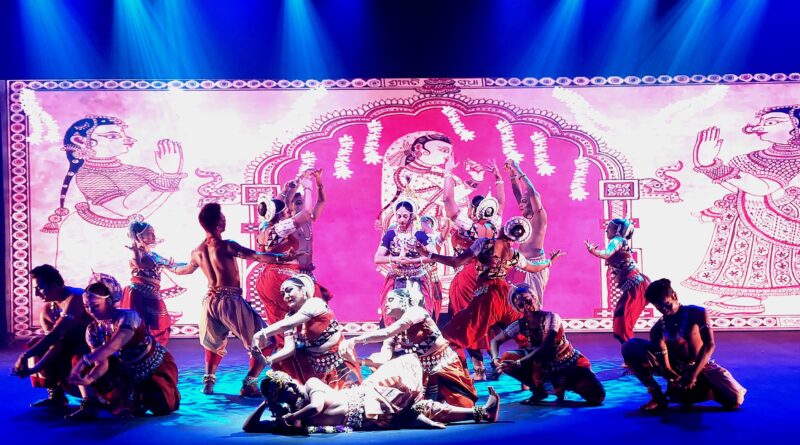
Sutra Foundation’s touring world premier Odissi dance production, Radhe! Radhe! 2.0, The Sweet Surrender, unfolded at the D’Sury Auditorium at Kompleks JKKN, Seremban recently, depicting the Radha Krishna pastime to delight the city’s audience.
The presentation enriched with background screening of Orissa’s rich traditional Pattachitra paintings by Bibhu Patnaik, brought to life the timeless love play of Radha Krishna and milkmaids (gopis) of Gokula headed by Radharani.
Sutra’s founder and artistic director, Padmashri Datuk Ramli Ibrahim together with Guru Gajendra Panda of Tridhara, Bhubaneswar directed and composed the dances for the production that had its world premiere in Kuala Lumpur in October 2025 followed by a tour of India.
The Seremban show organized by Padma Nrithyalaya Arts Seremban run by a student of the Doyen of Indian Dance, Padma Bhushan Dr Padma Subrahmanyam, Vinosree Shangkar; is part of a seven city Malaysian tour of Radhe Radhe’s second season for 2026.
Enacting the intimate loving pastimes of Radha Krishna on stage is indeed a great challenge as the choreographer has to first transport audiences to the transcendental realm from whence their eyes anointed with elixir of Prema Bhakti become enabled to grasp the spiritual essence of the loving pastimes of Radha Krishna.
Setting aside the human context of physical love, the choreography is aimed at drawing the audience into the transcendental realm of Goloka Vrndavan where the Radha Krishna pastime is believed to go on eternally.
Opening with the Mangalacharan, Shri Radha Dhyana in Raga Punnaga Baraadi and Khambabati, the performers invoked the Hladini Shakti (Pleasure Potency) of Shri Krishna manifested as Radharani, to seek her blessings for their quest to imbibe the Rasa of Radha Krishna love within the hearts and minds of the audience.
Child dancer Ashikar Raj who appeared as little Krishna captured the imagination of the audience with his nimble steps and refreshing smile. The truth of the matter is that Krishna is best represented by child performers as they can effortlessly adopt the super excellent attributes of Krishna given their pure innocence.
However involved in his art be he/ she, adult performers struggle to escape from drawing parallels while executing their depiction of the divine pastimes of Radha, Krishna and their retinue to their own ego derived physical bodies and minds.
The danger being the arousal of mundane physical sexuality that can disrupt the transcendental Rasa of the performance both for the performers and audience.
For that reason Indian traditional dance and drama practitioners adhere to strict rules as per the Natya Sastra treatise regarding proximity and physical contact between performers. The use of intricate abhinaya including gestures, postures and hand symbols (mudras); songs, costume and expression of emotional states offer a powerful narrative of the intimate nuances illustrated in the devotional poetry presented in dance form.
As Indian dance and drama is structured to depict ‘larger than life’ characters chiefly tied to divinity unlike Western forms like Ballet, its rules and regulations become a strict necessity.
The tight choreography of Radhe! Radhe! ensured the ample D’ Sury stage was fully utilised by the 18 performers of Radhe! Radhe!, never leaving a dull moment for the full house audience.
Apart from the full wall projections of the Pattachitra (cloth picture) visual narrative, featuring highly stylised line drawings exploding with colours sourced from natural pigments, the recorded classical Odisha music inspired by the lyrics and rhythm of Radha Prema Leela, a native dance-theatre tradition in Ganjam, Odisha composed by Guru Dr Gopal Chandra Panda, Guru Gajendra Kumar Panda, Guru Satchitananda Das and Srimathi Sangita Panda; created a divine atmosphere at the hall.
The highly trained Sutra dancers unfolded scene after scene depicting the intimate pastimes of Radha Krishna and the Gopis as told in the various Puranas, in particular the Srimad Bhagavatam.
The mental turmoil Radha undergoes, emotion-racked seeing Krishna flirting with her rival Chandravalli was exhibited beautifully by the graceful Geethika Shree.
The disappointment and heartbreak of Radha, in finding out that Krishna, her love interest is sporting with her rival while she waits expectantly for a tryst arranged with him at a nearby pond. Or in reprimanding Krishna for his flirtatious action.
Chandravalli played by Harini Mathevan was equally enlivening as the dancer used her athletic agility to effortlessly flit in and out of scenes, mischievously luring away Krishna from Radha to enjoy amorous trysts with him.
The painful Rasa (mellow) of Radha’s separation from Krishna is celebrated by devotees as the realisation of the individual soul’s anguish in forgetfulness of the Supersoul (God).
Veteran Sutra dancers Tan Mei Mei, Nithya Kuthiah and Nishah Devi Govindarajanthran together with other senior dancers used their wide experience to great effect taking up versatile roles as principal Gopis and Krishna in disguise as flower girl, bird seller etc. to pacify Radha.
The audience at the full house show who were earlier treated to the screening of a documentary, ‘Radha Unbound’ by Bangladeshi director, Rabby Deyan and a photography display at the theatre foyer by dance photographer S. Magendran, thoroughly enjoyed the evening’s performance.
As pointed out by Ramli, Seremban had always been a regular venue for Sutra’s out of Kuala Lumpur city tours especially organised in collaboration with Padma Nrithyalaya Arts’ team of artistic director Mrs Vinosree, husband Uma Shangkar, their daughter Varshini and her husband Ganesh.
The Radhe! Radhe! city tour will continue on June 20 at Brahma Vidyaranyam, Kulim and on June 27 at Permaisuri Zarith Sofiah Opera House, Johor Bahru.
Ends
